Green Technology and Sustainability 2026: Energy Revolution and Carbon-Neutral Future
Sustainable technology trends in 2026: renewable energy, perovskite solar panels, energy storage, green hydrogen, nuclear fusion, AI energy management and carbon footprint reduction.
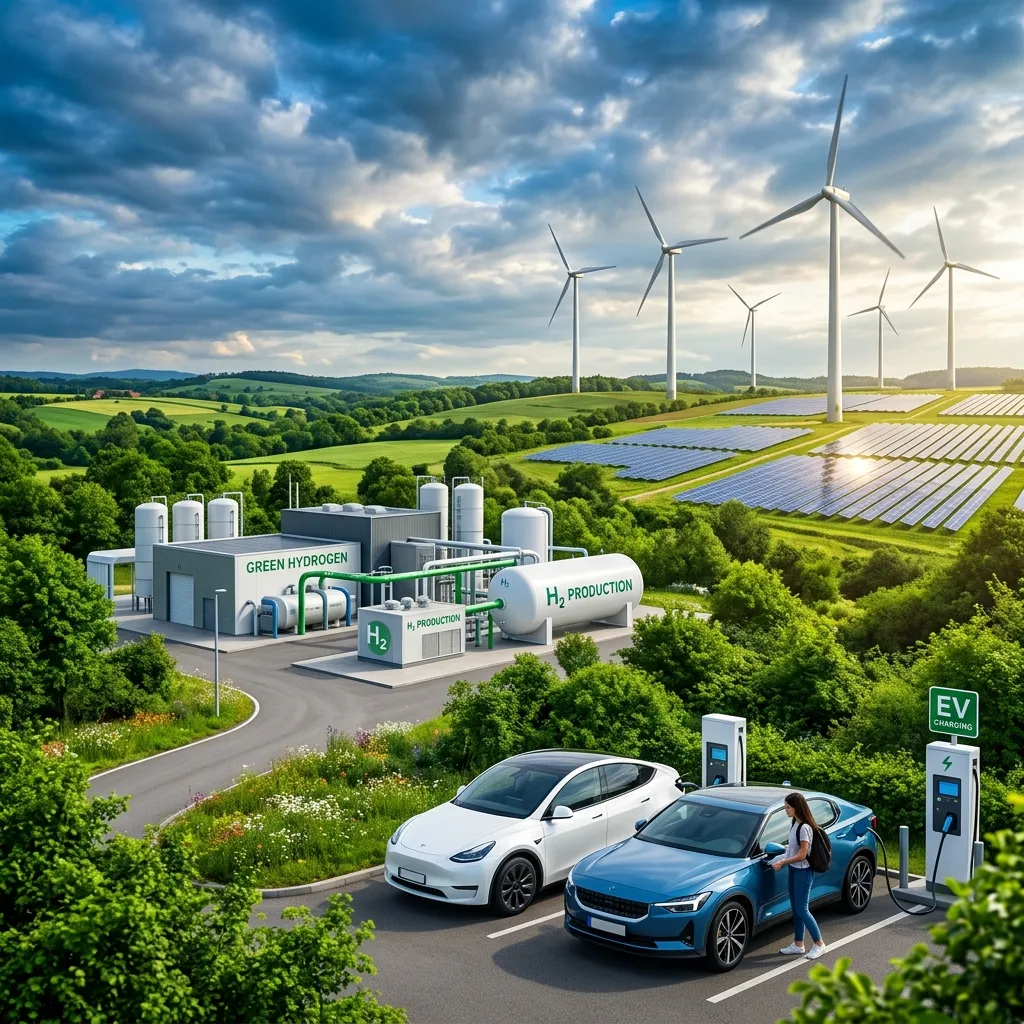
Climate change is the greatest existential threat facing humanity in 2026. However, it is clear that this threat also creates a technological and economic opportunity unprecedented in history. The green tech sector is no longer a niche environmental movement, it is a trillion-dollar industry and a key driver of competitive advantage.
Renewable Energy: From Experience to Infrastructure
Solar and wind energy will become cheaper than fossil fuels in many regions by 2026. But the real challenge of renewable energy is not the cost of production, it is uninterruptibility and grid integration.
Perovskite solar cells offer higher efficiency and lower manufacturing costs compared to traditional silicon panels. Entering the commercial market in 2026, perovskite technology has the potential to dramatically reduce solar energy costs once again. The efficiency of cells in tandem structure (silicon on perovskite) has increased to over thirty percent.
Floating solar farms solve the land problem and reduce water evaporation with solar panels installed on water surfaces. Dam lakes, irrigation ponds and coastal areas offer ideal areas for this technology.
Offshore wind energy gained momentum with the implementation of large-scale projects in 2026. Floating wind turbines offer the possibility of installation in deep waters, dramatically expanding the usable area.
Energy Storage: Uninterrupted Renewable Energy
The sun does not shine at night, the wind does not always blow. The continuity of renewable energy depends on the maturity of energy storage technologies.
While lithium-ion batteries are still the dominant technology, alternative chemistries are rapidly developing in 2026. Sodium-ion batteries offer a cost advantage by using more abundant and cheaper raw materials than lithium. Lithium-silicon batteries increase energy density, making it possible to store more energy in the same size.
Long-term energy storage (LDES) technologies aim to store energy over days and weeks rather than hours. Iron-air batteries, liquid air energy storage and gravity-based storage systems are innovations in this category. These technologies are critical to solving seasonal energy imbalances.
Distributed storage moves energy storage from centralized facilities to the end user. Home battery systems, electric vehicle batteries providing energy to the grid (V2G) and building-level storage increase the security of energy supply.
Energy Management with AI
Artificial intelligence assumes the role of “nervous system” in the management of complex energy systems.
Smart grid management coordinates distributed energy resources (solar panels, wind turbines, batteries, electric vehicles) in real time. AI optimizes the balance of generation and storage by predicting energy demand.
Demand side management shifts energy consumption to the most efficient hours. Air conditioning systems of commercial buildings, production plans of industrial facilities and electric vehicle charging times are automatically adjusted according to energy prices and network density.
Predictive maintenance minimizes unplanned downtime by planning the maintenance of wind turbines and solar panels before failure. Sensor data is analyzed by AI and potential malfunctions are detected weeks in advance.
Green Hydrogen
Green hydrogen, hydrogen produced by renewable energy, is a critical solution for hard-to-decarbonize sectors such as steel, heavy transportation and chemicals.
In 2026, the green hydrogen sector is leaving the initial hype period behind and focusing on realistic scaling strategies. Electrolyzer costs are decreasing, efficiency is increasing, and projects that are mature enough to be offered to the bank as a loan are being implemented.
Green steel production uses hydrogen-based direct reduction instead of fossil fuel-based blast furnaces. This single change has the potential to decarbonise the steel industry, which is responsible for seven percent of global carbon emissions.
Green ammonia stands out as a carbon-neutral fuel alternative for maritime transportation. Decarbonization of maritime transport, which carries ninety percent of global trade, is critical for climate goals.
Nuclear Energy and Fusion
Advanced nuclear fission technologies, especially Small Modular Reactors (SMR), are back on the agenda in 2026. The exponentially increasing energy demand of data centers has increased the need for uninterrupted and carbon-free power supply. SMRs can be built smaller, safer and faster than traditional nuclear power plants.
Nuclear fusion is the brightest star of long-term energy hope. In 2026, fusion is no longer just a research project, it is becoming a strategic reality. Concrete steps are being taken towards increasing investments, professionalizing road maps and commercial fusion reactor prototypes.
Water Technology: The New Green Agenda
Water stress has become a significant operational risk in 2026. Climate change, population growth and industrial consumption are putting freshwater resources under pressure.
Smart leak detection detects leaks in water distribution networks in real time with IoT sensors. Even in developed countries, water leakage rates can be over twenty to thirty percent, smart detection systems dramatically reduce this waste.
Low-energy desalination technologies make converting seawater into drinkable water more energy efficient. New membrane technologies are being developed that provide energy savings of up to forty percent compared to traditional reverse osmosis methods.
Carbon Capture and Storage
Direct air capture (DAC) are technologies that directly capture CO2 from the atmosphere. In 2026, DAC costs continue to decline but remain in the hundreds of dollars per ton, further innovation required for economic scale.
Bioenergy carbon capture (BECCS) provides negative emissions by capturing the CO2 released during biomass energy production.
Sustainability: From Marketing to Business Strategy
In 2026, sustainability is no longer a marketing narrative or side initiative, it is part of companies’ core operational strategy. Embracing sustainability in order to reduce costs, reduce waste and ensure business continuity has become a key determinant of competitive advantage.
ESG (Environmental, Social, Governance) reporting becomes mandatory. Investors consider sustainability performance as an integral part of their investment decisions.
IPEC Labs and Green Technology
As IPEC Labs, we support our sustainability commitment with concrete practices. The energy monitoring IoT module in our Smart School Ecosystem aims to reduce the energy consumption of school buildings by twenty to thirty percent. Google Cloud Run’s serverless architecture minimizes our carbon footprint by consuming resources only when used. NŞEFİM’s stock optimization module reduces the environmental impact of the restaurant industry by reducing food waste. Digital transformation reduces the impact of logging by eliminating paper consumption.
Subscribe to our newsletter!