Technology Vision 2026: The Intersection of AI, SaaS, and EdTech
Technology world vision for 2026: AI democratization, SaaS platform evolution, EdTech revolution, open-source ecosystem growth and the future of software engineering.
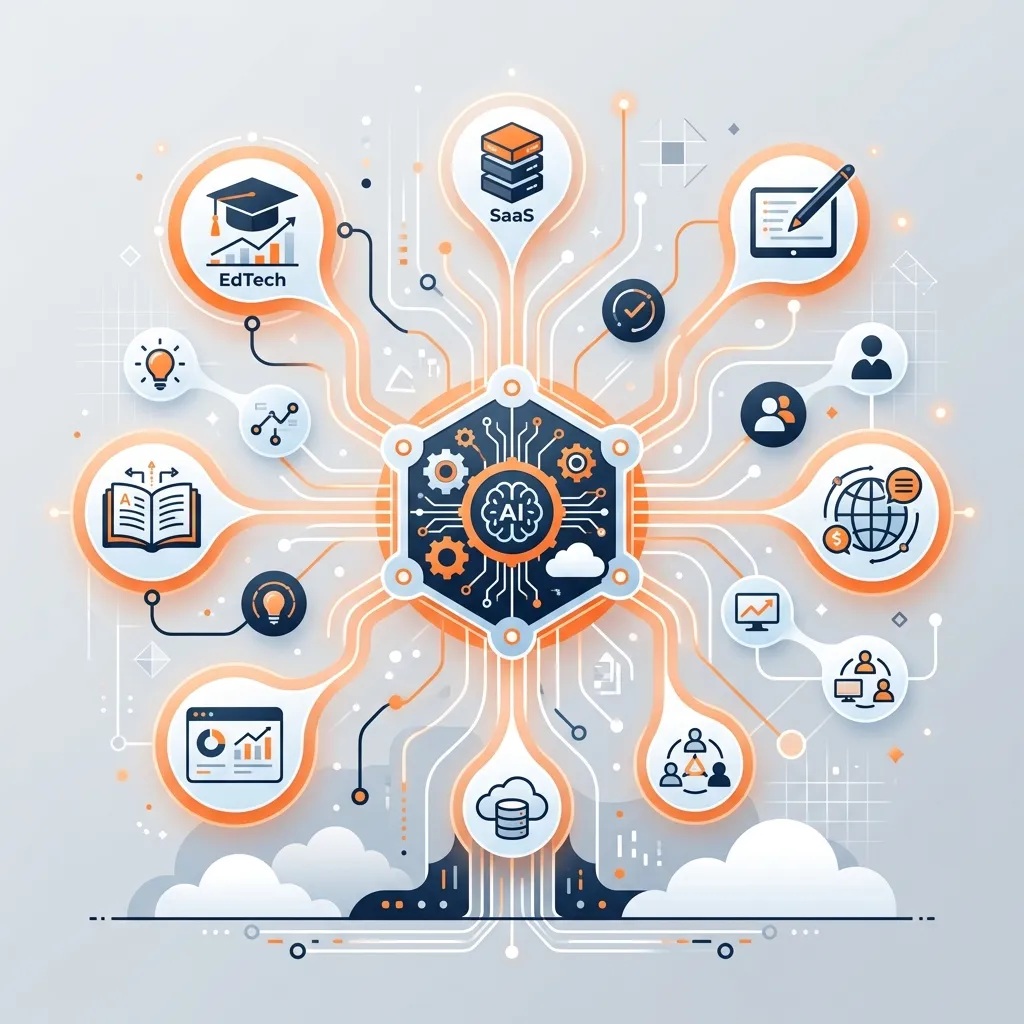
The world of technology is experiencing the fastest transformation period in its history. While artificial intelligence was an academic curiosity just a few years ago, today it has become the basic infrastructure of every industry. Cloud computing has radically changed software distribution models. Educational technologies call into question centuries-old teaching models. In this article, we discuss the current state of the technology world in 2026, determining trends and future projections.
Democratization of Artificial Intelligence
In 2023, artificial intelligence was under the monopoly of large technology companies. It was nearly impossible to train a serious AI model without multi-million dollar GPU investments and massive data sets. In 2026, this picture has completely changed.
The rise of open source models has democratized AI. Meta’s Llama series, Mistral AI’s models, and various community projects have made it possible for small companies and individual developers to use powerful AI models as well. Techniques such as fine-tuning and LoRA have made adapting existing models for industry-specific tasks both technically and financially accessible.
Cloud AI services also contribute to democratization. Platforms such as Google Cloud Vertex AI, AWS Bedrock, and Azure AI Studio make it possible to integrate AI capabilities into applications in minutes with an API call. A developer can access capabilities such as text analysis, image recognition, and audio conversion even without training his own model.
Edge AI moves artificial intelligence from the cloud to the device, reducing privacy concerns and eliminating latency. Smartphones, IoT devices, and embedded systems can now make AI inferences without connecting to the cloud.
Evolution of SaaS Platforms
The Software as a Service model has become the software industry’s default distribution model. But in 2026, SaaS itself is undergoing a major evolution.
The rise of Vertical SaaS has accelerated as the horizontal SaaS market has reached saturation. Instead of general-purpose CRM, project management and communication tools, deeply specialized platforms for specific sectors such as restaurant management, dentistry, logistics and agriculture stand out. These platforms speak the language of the industry, understand the industry’s workflows, and comply with industry-specific regulations.
AI-native SaaS positions AI as an architectural foundation, not as an added feature. In these platforms, AI works in the background without the user being aware: analyzing data, generating predictions, detecting anomalies and providing proactive recommendations.
Composable SaaS architecture envisions monolithic applications being replaced by modular, composable components. Businesses create their own customized solutions by selecting and combining different services according to their needs.
Usage-based pricing replaces fixed subscription fees with usage-based pricing. This model lowers the barrier to entry, especially for startups and SMEs.
EdTech Revolution
Educational technologies gained momentum during the pandemic period and reached the maturity stage in 2026. EdTech no longer just means “online courses”, it is a comprehensive digital transformation movement that covers the entire ecosystem of education.
AI-powered personalized learning offers adaptive platforms that adapt to each student’s individual pace and style. The traditional “same course for everyone” model is being replaced by a personalized learning journey for each student.
Gamification increases motivation by gamifying learning. Point systems, achievement badges, leaderboards and leveling mechanics dramatically increase students’ interest in the course.
Immersive learning makes the learning experience three-dimensional with VR and AR technologies. Virtually touring ancient Rome in a history class, diving inside a cell in a biology class, these experiences are now possible in 2026.
Micro-learning provides effective learning in the digital age where attention span is shortened with short and focused learning modules. Five-ten minute video lessons, interactive quizzes and flashcards are the tools of this approach.
Growth of the Open Source Ecosystem
Open source software is the cornerstone of the technology ecosystem in 2026. Projects such as Linux, Kubernetes, PostgreSQL, React, TensorFlow form the infrastructure of the world’s largest technology companies.
Open source business models have also matured. The open core model offers the core product as open source and provides corporate features for a fee. The managed service model offers open source software as a managed cloud service. The support and consultancy model provides professional support for open source projects.
The Future of Software Engineering
The proliferation of AI coding assistants is changing the nature of software engineering. In 2026, developers no longer write every line themselves, they work much faster and more efficiently by collaborating with AI.
However, this does not mean that software engineers have become redundant. On the contrary, high-level skills such as architectural decisions, system design, understanding business requirements, and evaluating AI outputs have become more valuable than ever.
The full-stack engineering profile requires competence in a wide range of areas such as frontend, backend, database, DevOps and now AI integration. While specialization is still valuable, engineers who can see the big picture have become much more sought-after.
Türkiye Technology Ecosystem
Türkiye’s technology ecosystem is growing rapidly in 2026. The number of unicorns is increasing, software exports are rising and the pool of qualified engineers is expanding. However, there are also difficulties: migration of trained engineers, exchange rate risks and regulatory uncertainties are factors affecting the sector.
IPEC Labs’ Position in This Ecosystem
As IPEC Labs, we are positioned at the intersection of these technology trends. We contribute to the democratization of artificial intelligence with NZeca AI, participate in the vertical SaaS revolution with NŞEFİM, and lead the EdTech transformation with the Smart School Ecosystem. Producing technology from Türkiye to the world, keeping the engineering culture alive and aiming for sustainable growth - this is our vision.
Subscribe to our newsletter!