IoT and Smart Campus: How We Transform Schools in 2026
IoT smart campus transformation: facial recognition entry/exit, palm vein payment, energy monitoring, bus GPS tracking, hygiene sensors and IoT security architecture in education.
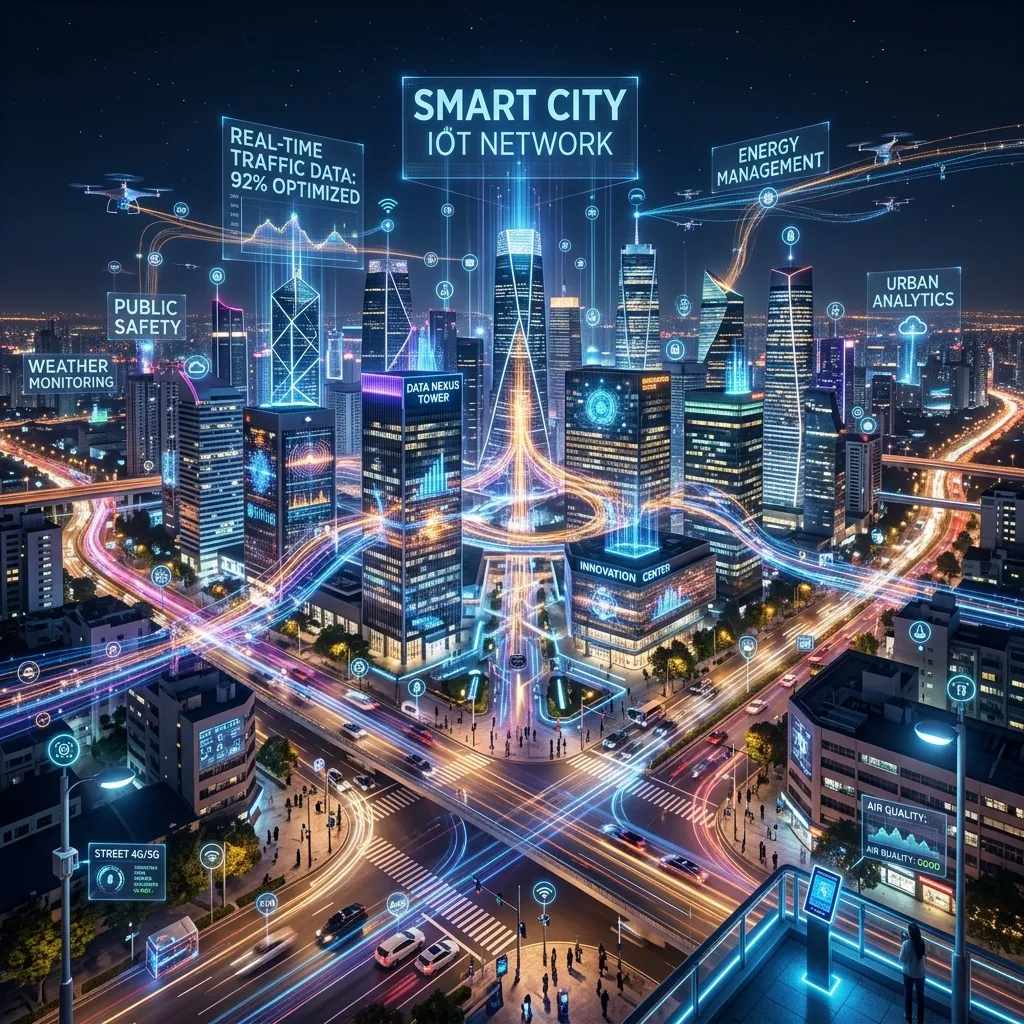
The smart campus concept aims to create a safe, efficient and transparent educational environment by transforming the physical infrastructure of educational institutions with IoT sensors, artificial intelligence and data analytics. By 2026, thousands of schools around the world have adopted smart campus technologies, and this trend is growing rapidly.
Key Components of Smart Campus
A smart campus is not a collection of independent technologies - it is an ecosystem that works integrated with each other, is managed through a common data platform and offers a holistic experience.
The security layer ensures the physical safety of students and staff: entry-exit control, visitor management, camera systems and emergency protocols. The operational layer optimizes the daily work of the school administration: energy management, cleaning monitoring, maintenance planning. The education layer enriches the learning experience: smart classroom equipment, interactive displays, voice assistants. The communication layer ensures the flow of information in the school-parent-student triangle: mobile applications, push notifications, digital reporting.
Biometric Entry-Exit Systems
The first line of school security is knowing exactly who is entering and exiting the building. Traditional methods, the security guard’s gaze, showing a student ID card, are inadequate and unreliable.
Facial recognition technology is the most advanced form of biometric input-output. When a student or staff member approaches the turnstile or door, the camera recognizes their face and verifies their identity within milliseconds. Problems of forgetting a card, sharing a card or losing a card are completely eliminated.
Edge AI processing is the most critical technical feature of these systems. Facial recognition analysis occurs on the device, image data is not sent to the cloud. This provides a great advantage both in terms of KVKK compliance and delay. Recognition time is under 200 milliseconds.
Anti-spoofing technologies prevent deceiving the system with fake photos or videos. 3D depth detection, infrared scanning and liveness detection provide this protection.
Parent notification integration is the bridge between the facial recognition system and the mobile application. Parents receive instant push notifications when the child enters or exits school. An automatic alert is triggered if there is no login at the expected time.
Palm Payment System
Biometric payment is an innovative solution that eliminates the use of cash and cards in canteen and cafe shopping. The palm vein pattern is unique to each individual and is considered more reliable than fingerprints.
The working principle of the system is as follows: the student or staff brings his hand close to the reader, infrared sensors scan the palm vein pattern, the system verifies the identity and makes the payment from the digital wallet. The entire process is completed in under two seconds.
Hygiene advantage is of great importance in the post-pandemic period. Contactless operation does not require a common touch surface. The risk of germs carried with cash is eliminated.
Parental control is one of the most valuable features of this system. Parents can set a daily spending limit, restrict certain product categories (for example, a junk food ban), view each expenditure instantly, and review the weekly nutrition report via the mobile application.
Balance management is completely digital. Parents load the balance online via credit card or money transfer. A low balance alert is sent automatically. With the automatic top-up option, automatic top-up can be made when the balance falls below a certain level.
Energy Monitoring and Optimization
School buildings are large energy consumers. Air conditioning, lighting, heating, computer laboratories and kitchen equipment constantly consume energy. Real-time monitoring and automation of energy consumption with IoT sensors provides significant savings.
Smart lighting is controlled by motion sensors and ambient light sensors. Lights are turned off automatically in empty classrooms. When natural light is sufficient, artificial lighting is dimmed. Automatic brightness adjustment is made according to daylight.
Smart HVAC (heating, ventilation, air conditioning) automatically adjusts based on room occupancy and outside weather conditions. In empty classrooms, the air conditioner switches to energy saving mode. As class time approaches, the classroom is brought to the desired temperature.
The overall effect of these optimizations is remarkable. Annual energy savings in school buildings are reported to be between twenty and thirty percent. For a large school campus, this could mean savings of between sixty thousand and one hundred fifty thousand dollars per year.
Carbon footprint reporting measures and visualizes the school’s environmental impact. This data can also be used for environmental awareness education, students learn about their school’s energy consumption and environmental impact with real data.
Service GPS Tracking System
School buses are one of the biggest sources of concern for parents. Whether the child is on the shuttle, where the shuttle is located, estimated time of arrival, this information is critical for parents.
Real-time map integration allows parents to see the current location of the service from the mobile application. ETA (Estimated Time of Arrival) calculation is updated dynamically, taking into account traffic conditions.
The safe zone (geofencing) mechanism triggers an automatic alarm if the service goes outside the predefined route. Stops made outside the planned stops are reported.
Speed control warns both the driver and the school administration if the driver exceeds the specified speed limit. All speed violations are logged and shown in monthly reports.
Boarding-disembarkation tracking records the point where each student gets on and off the bus using RFID or facial recognition. If the student gets off at the wrong stop, an automatic notification is sent.
Hygiene and Environmental Sensors
Hygiene standards have risen permanently in the post-pandemic period. IoT sensors constantly monitor the hygiene and environmental conditions of the school environment.
Air quality sensors measure CO2 levels, humidity, temperature, dust particles and volatile organic compounds. Ventilation is automatically activated when the CO2 level exceeds a certain threshold. Poor air quality directly affects student concentration,research shows that cognitive performance decreases by up to fifteen percent in a high CO2 environment.
Disinfection tracking provides a digital checklist for the cleaning team. Each area (classroom, corridor, toilet, canteen) is confirmed by scanning the QR code after cleaning. An automatic alert is sent when the planned cleaning is not carried out.
Noise level monitoring measures the sound level in classrooms and corridors. Excessive noise both reduces the quality of learning and affects hearing health in the long term. When the noise threshold is exceeded, a visual warning (light color change in the classroom) is activated.
IoT Device Security
IoT devices create potential entry points for cyber attacks. Particularly in an educational environment, where children’s data is at stake, IoT security must be paramount.
Network segmentation isolates IoT devices from the main school network. If an IoT device is compromised, the attacker will not be able to access the student database or administrative systems.
Firmware encryption and secure boot prevent device manipulation. When the device is turned on, firmware integrity is verified and if any changes are detected, the device will not work.
Over-the-air (OTA) updates enable security patches to be applied remotely and automatically. The school’s technical team does not need to physically access every device.
IPEC Labs Smart Campus Solution
As IPEC Labs, the IoT modules in our Smart School Ecosystem, face recognition input-output, palm payment, energy monitoring, service GPS tracking and hygiene sensors, are an integrated and manageable implementation of all the technologies detailed above, adapted to the Turkish education sector. All IoT modules are controlled from a single management panel, data is analyzed and reported centrally. We are building Türkiye’s most comprehensive education IoT platform with our seven-phase development plan.
Subscribe to our newsletter!