AI in Education 2026: From Experimentation to Enterprise Strategy
AI integration in 2026 education technology: personalized learning, intelligent tutoring systems, teacher empowerment, special education AI and enterprise AI governance.
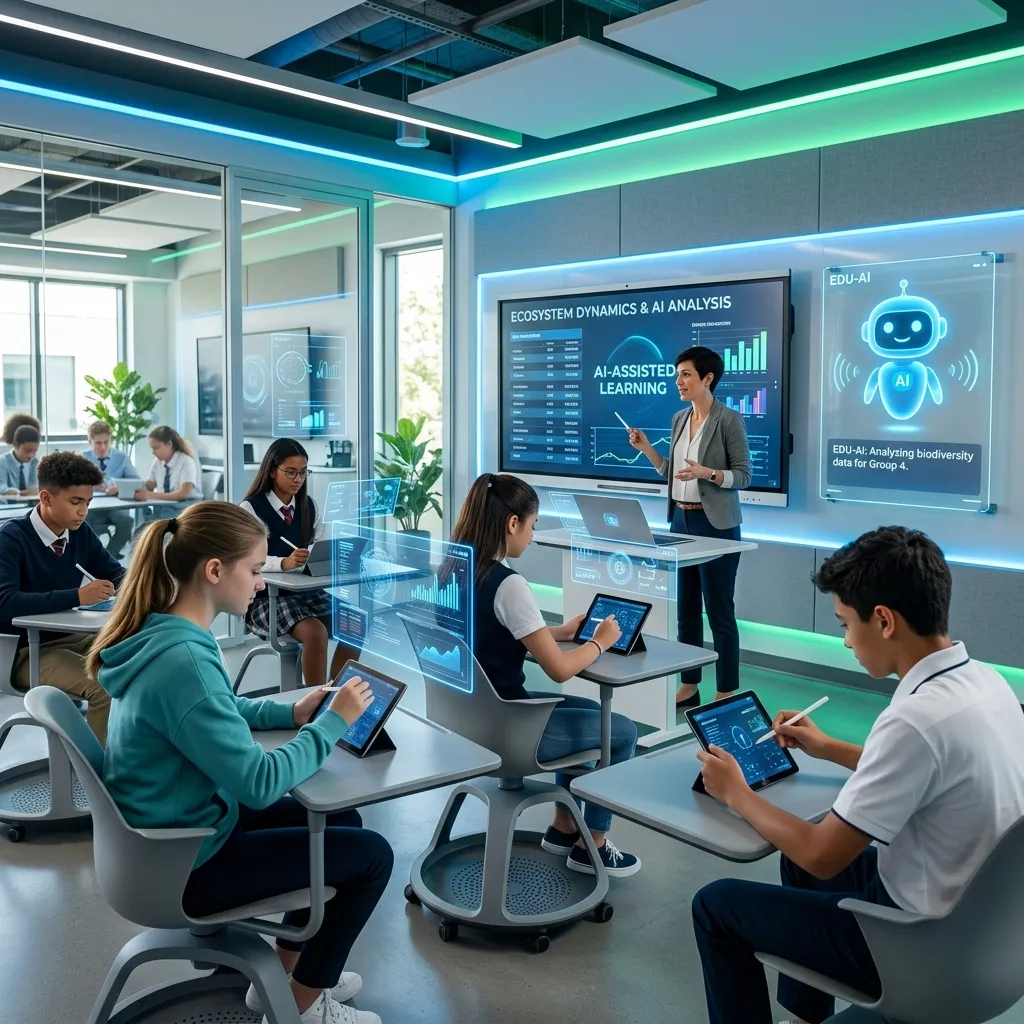
The education technologies sector is passing a historical turning point in 2026. AI is no longer an experimental tool in the classroom, it has become the enterprise operating system of the education ecosystem. Pilot projects and initiatives by individual technology-enthusiastic teachers have given way to strategic AI integrations across the institution.
From Experience to Corporate Strategy
In 2023-2024, schools were in AI exploration mode. Individual teachers were creating lesson plans with ChatGPT, and students were using AI to write assignments. But these uses were uncoordinated, unpolished, and often controversial.
In 2026 the picture is completely different. Educational institutions are now asking “Should we use AI?” He doesn’t ask the question. The question is “How do we manage our AI strategy?” happened. Corporate AI policies are being created, ethical frameworks are being determined, and governance mechanisms are being established to ensure the quality of educational outcomes.
There are three drivers for this transition. The first is regulatory pressure, governments are issuing regulations regarding the use of AI in education. The second is parent expectation, technology-literate parents expect digital transformation from their children’s schools. The third is competitive pressure, schools that integrate AI are increasing their enrollment numbers compared to those that do not.
Hyper-Personalized Learning
Every student is unique, they learn at different paces, comprehend better in different ways, work more efficiently at different hours, and are interested in different topics. The traditional classroom model ignores this individuality: thirty students are taught the same lesson, at the same pace, with the same method.
Adaptive learning systems solve this problem with AI. The system constantly analyzes each student’s interactions, which questions they answered correctly, which topics they spent more time on, which types of content (video, text, interactive) they learned better with, and adapts their learning path in real time.
Learning path adaptation is a dynamic process. If a student is having trouble understanding fractions, the system automatically provides additional visual explanations and practice problems. If the same student is progressing rapidly in geometry, the system raises the level and presents challenging problems. The goal is to keep each student in a “flow state”, not too easy, not too hard, just at the optimal difficulty.
The gap detection and closing mechanism automatically identifies deficiencies in the learning process. The reason why a student makes a mistake when solving decimals may actually be a missing basis in previous fractions. AI detects this root cause and directs it to close the underlying deficiency first.
Intelligent Teaching Systems (ITS)
Intelligent Tutoring Systems (ITS) are AI platforms that offer a one-on-one tutoring experience to every student. In traditional education, one-on-one private lessons are a luxury that few students have access to due to cost. ITS democratizes this experience.
The Socratic dialogue approach is ITS’ most effective teaching strategy. Instead of giving direct answers, the system guides the student to the correct answer with guiding questions. “What should you do first to solve this equation?” or “What rule applies here?” It activates the student’s thinking process with questions such as.
Sentimental analytics integration is the new capability of ITS platforms in 2026. Motivation level, boredom and frustration can be determined from the student’s text entries, response times and interaction patterns. When frustration is detected, the system changes its approach, offering a simpler explanation or switching to a different teaching strategy.
Specialized Educational Intelligence (SEI)
General-purpose AI models (such as ChatGPT, Claude) pose serious risks when used in education. The problem of hallucination,false information that the model confidently presents,is unacceptable in an educational context. The wrong solution to a math problem or the wrong explanation of a historical event causes permanent mislearning in the student.
Specialized Training Intelligence (SEI) are specialized models trained on validated training content. They are models that are fully compatible with the Ministry of Education curriculum, have over ninety-nine percent accuracy in creating exam questions, and minimize the risk of hallucinations.
SEI models have the ability to say “I don’t know” in case of uncertainty. While general-purpose models try to answer every question, SEI models direct the question to the teacher in cases that are below the reliability threshold.
Empowering Teachers
AI’s biggest impact in education is automating teachers’ “shadow work”, administrative tasks like entering grades, preparing lesson plans, creating worksheets, writing parent reports, and so on.
Research shows that forty to fifty percent of teachers’ weekly work time is spent on non-instructional administrative tasks. AI dramatically reduces this time, allowing teachers to focus directly on student interaction.
Automatic grade evaluation produces instant results for multiple choice and short answer questions. AI-powered assessment can provide consistent scoring even on open-ended questions and essays. The teacher reviews the AI’s assessment and corrects it as necessary, much faster than assessing it completely from scratch.
The lesson plan creator produces a detailed lesson plan according to the subject, outcome and duration specified by the teacher. Activity suggestions, material lists, and evaluation methods are automatically included.
Data-driven insights provide teachers with classroom-wide and individual student performance analysis. It visualizes which topics are the most challenging, which teaching methods are most effective, and which students need additional support.
Early Warning Systems
Early detection of at-risk students is one of the most valuable applications of AI in education. Signals such as academic performance decrease, increased absenteeism, homework delivery delay, and decrease in social interaction are evaluated together and the risk score is calculated.
The system automatically notifies the guidance counselor, classroom teacher and school administration when the risk score exceeds a certain threshold. The earlier intervention is provided, the better the student’s chances of academic and social recovery.
Equality and Ethics Questions
The proliferation of AI in education raises serious ethical questions. Algorithmic bias can reinforce existing inequities in training data. Underrepresentation of data from students in low-income areas may cause AI systems to be less effective for these students.
Data privacy is a serious concern in the collection and processing of student data. Since student data belongs to children, it must be protected much more sensitively than adult data.
The digital divide risks schools with inadequate technology infrastructure being excluded from the AI revolution. The technology gap between schools in rural areas and schools in big cities can deepen educational inequality.
IPEC Labs Smart School Ecosystem
As IPEC Labs, our Smart School Ecosystem is the most comprehensive implementation of all the above-mentioned trends adapted to the Turkish education system. Our NZeca AI-based course assistant has been specially trained for the MEB curriculum with SEI principles. Our early warning system proactively identifies at-risk students by analyzing academic, attendance and behavior data. Our automation tools, which reduce teacher workload by forty to sixty percent, include lesson plan creation, exam preparation and parent reporting processes. We aim to provide a solution to the digital divide problem with the Public School package.
Subscribe to our newsletter!